

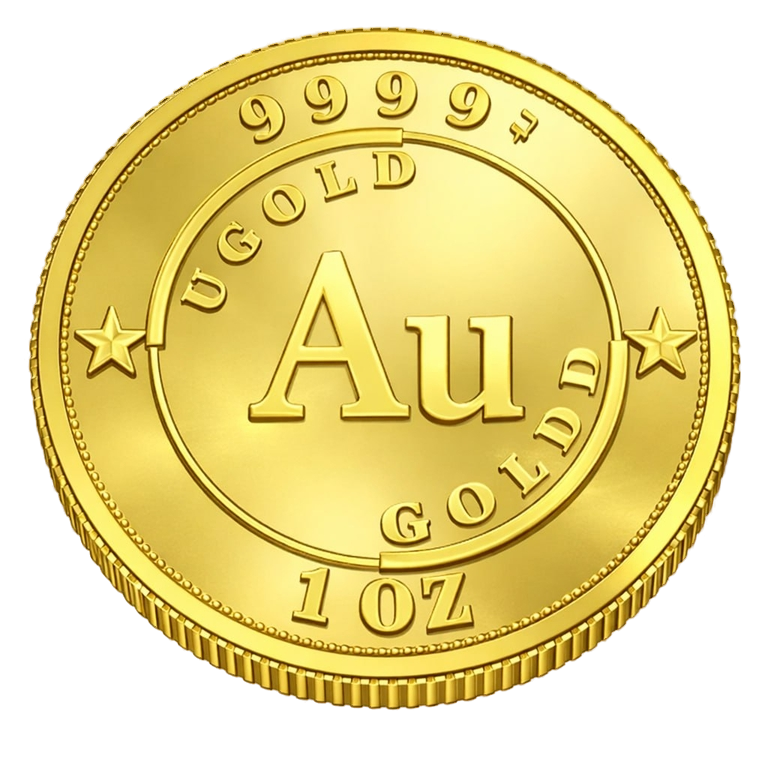
UGOLD White Paper
Digital Gold Infrastructure for the Modern Financial System
Version 4 – Institutional Edition
Prepared by UGOLD Inc., Nevada, United States
1. Executive Summary
The global financial system is entering a period of transformation that may fundamentally reshape how value is stored, transferred, and settled across international markets. For much of the past half century the world economy has operated primarily within a fiat monetary framework supported by central bank monetary policy, international banking networks, and increasingly complex financial intermediaries. While this system has enabled unprecedented economic expansion and global trade integration, it has also introduced structural vulnerabilities that are becoming increasingly visible.
Persistent inflationary pressures, expanding sovereign debt levels, geopolitical fragmentation of
financial infrastructure, and recurring systemic financial crises have prompted governments, institutions, and investors to reconsider the role of neutral monetary assets capable of preserving value across political and economic cycles.
Gold has historically fulfilled precisely this role.
Across centuries and civilizations, gold has consistently served as a store of value, a settlement asset between nations, and a strategic reserve for central banks. Even today central banks collectively hold tens of thousands of metric tons of gold as part of their monetary reserves, underscoring the continued relevance of gold within the global financial system.
Despite its enduring monetary credibility, the infrastructure surrounding gold markets remains largely tied to the physical economy of previous centuries. Traditional gold trading relies on transportation logistics, vault storage, insurance arrangements, and settlement processes that are slow relative to modern digital financial systems.
In an era where trillions of dollars move across global payment networks in seconds, the inability of gold to integrate directly with digital financial infrastructure represents a structural limitation.
Blockchain technology provides a mechanism for overcoming this limitation.
By representing gold value through cryptographically secured digital tokens, blockchain systems allow gold ownership to be transferred instantly across borders, integrated into programmable financial contracts, and incorporated into modern payment networks.
UGOLD was created to bring the historical monetary stability of gold into the digital financial era.
UGOLD is a digital asset designed to represent the value of one troy ounce of gold while operating within a blockchain-based financial ecosystem capable of supporting trading, payments, settlement, and programmable financial applications.
Unlike traditional gold-backed tokens that rely on vault storage of large bullion reserves, UGOLD introduces a new operational model known as Gold-as-a-Service (GaaS). Under this framework physical gold is produced on demand when token holders request conversion, eliminating the need for large static reserves while preserving convertibility into physical gold products.
The UGOLD ecosystem integrates multiple technological and financial components including:
• blockchain token infrastructure
• a proprietary non-custodial wallet
• exchange trading liquidity
• global payment infrastructure supporting more than 140 currencies
• debit card payment capabilities
• international trade settlement protocols
• institutional custodial infrastructure operating within a regulated financial environment
Together these elements form a comprehensive digital gold financial platform capable of operating within both retail and institutional financial environments.
By combining the stability of gold with the efficiency of blockchain technology, UGOLD seeks to establish a new category of financial infrastructure capable of supporting the evolving needs of the global economy.
2. Introduction
Gold has played a central role in the history of money for thousands of years. Long before the emergence of modern banking systems or fiat currencies, gold served as a universally recognized medium for preserving wealth and facilitating trade between distant regions and civilizations.
The physical properties of gold made it uniquely suited to monetary use. Gold is durable, resistant to corrosion, easily divisible, and scarce enough to maintain long-term value. These characteristics allowed gold to function as a stable medium of exchange across diverse cultures and economic systems.
For centuries, international trade was conducted using gold as the ultimate settlement asset between nations. Even as paper currencies emerged during the early modern period, those currencies were typically backed by gold reserves held within national treasuries.
The twentieth century witnessed a gradual transition away from the gold standard toward fiat monetary systems. Governments gained the ability to issue currency independent of physical commodity reserves, allowing greater flexibility in managing economic policy.
However, the abandonment of gold-backed monetary systems did not eliminate gold’s role within global finance. Instead, gold evolved into a strategic reserve asset held by central banks and institutional investors seeking protection against inflation and financial instability. Despite its continued importance, the infrastructure surrounding gold markets has remained largely unchanged. Physical gold trading requires transportation logistics, vault storage, insurance arrangements, and regulatory oversight.
These processes introduce operational costs and settlement delays that limit gold’s ability to function within modern financial systems operating at digital speed.
At the same time, financial technology has advanced dramatically. Payment networks now process billions of transactions per day across global electronic systems. Securities trading platforms execute transactions in milliseconds. Blockchain networks enable digital assets to move across borders without reliance on traditional banking intermediaries.
This technological transformation has created a new opportunity to modernize the role of gold within global finance.
By representing gold value through blockchain-based digital tokens, it becomes possible to integrate gold into high-speed financial networks while preserving the monetary stability that has historically made gold valuable.
UGOLD represents one of the most comprehensive attempts to realize this vision.
3. Transformation of the Global Monetary System
The global monetary environment has undergone profound structural changes during the past several decades. These changes have significant implications for the future role of reserve assets such as gold.
One of the most important developments has been the rapid expansion of global money supply.
Following the financial crisis of 2008 and subsequent economic disruptions, central banks around the world implemented large-scale monetary stimulus programs designed to stabilize financial markets and support economic recovery.
These policies dramatically increased the amount of fiat currency circulating within the global economy.
While such measures played an essential role in preventing systemic financial collapse, they also introduced long-term concerns regarding currency depreciation and inflation. Many investors now view fiat currencies as vulnerable to political decision-making and economic cycles.
As a result, interest in alternative stores of value has increased significantly. Another major development has been the fragmentation of global financial infrastructure.
International payment systems, correspondent banking networks, and financial clearing institutions operate within complex regulatory frameworks that can influence how financial transactions are conducted across borders.
Geopolitical tensions have further complicated this environment. Economic sanctions, regulatory barriers, and political considerations increasingly affect the ability of institutions and governments to move funds across traditional financial channels.
These developments have encouraged exploration of alternative financial infrastructures capable of operating independently of centralized banking networks.
Blockchain technology provides one potential solution. Decentralized financial networks enable digital assets to move globally without relying on traditional financial intermediaries.
In this emerging environment, gold may once again play a central role in global finance—this time in digital form.
4. Limitations of Traditional Gold Markets
While gold remains one of the most trusted stores of value in the world, the infrastructure governing gold markets presents several structural limitations that prevent gold from fully participating in modern financial systems.
The most significant limitation is the reliance on physical logistics. Moving gold across borders requires secure transportation, insurance coverage, and regulatory compliance. These processes introduce both cost and time delays that make gold settlement inefficient compared to digital financial instruments.
Another limitation involves storage infrastructure. Large quantities of gold must be stored in specialized vault facilities operated by banks or bullion custodians. These facilities require extensive security measures and ongoing operational oversight.
The cost of vault storage and insurance can be substantial, particularly when gold reserves remain idle for extended periods.
Additionally, the physical nature of gold makes it difficult to divide and transfer in small units.
While financial derivatives such as gold futures allow investors to gain exposure to gold prices, these instruments do not provide direct ownership of physical gold.
These limitations have historically restricted gold’s ability to function as a transactional asset within modern financial systems. Digital tokenization offers a solution to many of these challenges.
By representing gold value through blockchain tokens, digital gold assets can be transferred instantly, divided into fractional units, and integrated into programmable financial contracts.
However, many existing digital gold projects still rely on traditional vault storage of bullion reserves, preserving many of the operational complexities associated with physical gold markets. UGOLD introduces an alternative approach.
5. Emergence of Digital Commodity Finance
The emergence of blockchain technology has created new possibilities for representing physical assets digitally.
Through tokenization, physical commodities such as gold can be represented as digital assets on blockchain networks. These tokens can be transferred globally, integrated into decentralized financial systems, and used as collateral within programmable financial contracts.
Digital commodity assets combine the intrinsic value of physical commodities with the efficiency of blockchain-based financial infrastructure.
This development represents the foundation of a new field often described as digital commodity finance.
Within this emerging field, digital representations of commodities can support a wide range of financial applications including payments, settlement, lending, derivatives, and programmable financial instruments.
Gold is particularly well suited to digital tokenization due to its long-standing role as a monetary asset.
However, existing digital gold systems typically rely on vault storage models in which physical gold reserves correspond directly to circulating token supply.
While this approach provides asset backing, it also introduces operational complexity associated with storage, auditing, and custodial risk.
UGOLD introduces a new operational paradigm that seeks to overcome these limitations while preserving the monetary value of gold.
6. The UGOLD Architecture
The UGOLD ecosystem is designed as a multi-layer digital financial infrastructure that combines blockchain technology, commodity markets, payment systems, and financial services into a unified platform. At its core, the architecture seeks to address a central challenge: how to enable gold, one of the most historically trusted stores of value, to function within modern digitalї financial networks without losing the qualities that have made it valuable for centuries.
Traditional financial systems separate commodity markets, payment infrastructure, and banking networks into distinct operational layers. Gold markets, for example, typically operate independently from retail payment networks or international settlement systems. This fragmentation limits gold’s ability to function as an integrated financial instrument.
The UGOLD architecture is designed to unify these layers.
At the center of the ecosystem is the UGOLD token, a blockchain-based digital asset representing the value of one troy ounce of gold. The token operates through smart contract infrastructure that governs issuance, transfer, and compliance functionality while ensuring transparency and security within the network.
Surrounding the token infrastructure are several interconnected technological and financial components that enable the token to operate within a broader financial ecosystem.
The first of these components is the non-custodial UGOLD Wallet, which serves as the primary interface through which individuals and institutions interact with the system. The wallet enables secure storage and management of digital assets while preserving direct ownership through private key control.
The second component is exchange liquidity infrastructure. The UGOLD token is designed to be traded on digital asset exchanges where price discovery and liquidity are established through market activity. Exchange integration allows the token to participate in global digital asset markets and ensures that participants can enter or exit positions efficiently.
The third component is the global payment gateway, which enables users to acquire UGOLD using more than 140 national currencies. This gateway connects the traditional financial system to the blockchain-based ecosystem, allowing capital to flow into the digital gold network from virtually any region of the world.
The fourth component is the debit card payment infrastructure, which allows UGOLD holders to spend gold balances in everyday transactions through existing merchant networks.
Finally, the ecosystem includes the UGOLD Trade Settlement Protocol, a framework designed to enable international commercial transactions to settle using digital gold as a neutral settlement asset. Together these components form a comprehensive digital gold financial infrastructure capable of supporting a wide range of financial activities including investment, payments, and international settlement.
7. Gold-as-a-Service (GaaS)
One of the most distinctive elements of the UGOLD ecosystem is the introduction of the Goldas-a-Service (GaaS) operational model.
Traditional gold-backed digital assets typically rely on vault storage of physical bullion reserves corresponding to circulating token supply. Under this model, each digital token represents ownership of a portion of stored gold.
While this structure provides asset backing, it introduces several operational challenges.
First, vault storage requires specialized facilities equipped with high levels of security. These facilities must be insured and monitored continuously, creating ongoing operational costs.
Second, gold reserves must be audited regularly to verify that stored bullion corresponds to the circulating token supply. These auditing requirements add administrative complexity and introduce reliance on third-party verification.
Third, large quantities of gold may remain idle within vault storage for extended periods, representing capital that could otherwise be deployed within financial markets.
The GaaS model seeks to overcome these limitations.
Instead of storing large bullion reserves in advance, UGOLD produces physical gold only when token holders request redemption. When a token holder initiates a conversion request, the system arranges the minting of gold coins or bars through integrated production partners.
Once minted, the gold products are delivered through established logistics channels.
This approach preserves the ability of token holders to obtain physical gold while eliminating the need for extensive vault storage infrastructure.
The GaaS model therefore allows the digital ecosystem to operate with greater capital efficiency while maintaining the fundamental link between the digital token and physical gold.
In practical terms, this model transforms gold from a static stored asset into a dynamic financial service capable of supporting scalable digital liquidity.
8. Custodian and Canadian Regulated
Financial Infrastructure
While the UGOLD ecosystem relies on decentralized blockchain infrastructure for digital asset management, institutional credibility requires integration with regulated financial infrastructure capable of supporting large-scale financial operations.
To address this requirement, the UGOLD ecosystem incorporates custodial and financialї infrastructure through cooperation with a licensed financial entity operating under regulatory supervision in Canada.
This partner operates within a regulatory framework overseen by the Central Bank of Canada and associated Canadian financial regulatory authorities.
Canada is widely regarded as one of the most stable and transparent financial jurisdictions in the world. Financial institutions operating within the Canadian regulatory environment must comply with strict standards related to financial reporting, operational risk management, and anti-moneylaundering compliance.
By integrating regulated financial infrastructure into the ecosystem, UGOLD strengthens its institutional credibility and enables interaction with banks, financial institutions, and governments within a recognized regulatory environment.
The custodial structure within the ecosystem is designed to complement the decentralized architecture of the UGOLD Wallet.
While individual users maintain direct control over their digital assets through private keys, certain financial functions such as payment processing infrastructure and institutional settlement accounts benefit from operating within regulated financial environments.
This hybrid architecture combines the advantages of decentralized digital asset ownership with the regulatory clarity provided by licensed financial institutions.
For institutional participants evaluating digital commodity infrastructure, the presence of regulated financial partners is often a critical factor in establishing trust and operational viability.
9. Global Payment Infrastructure Supporting 140+ Currencies
Access to global commodity markets has historically been limited by currency conversion barriers.
In many regions of the world, individuals and institutions seeking to acquire gold must first convert their local currencies into internationally traded reserve currencies such as the United States dollar or the euro before accessing global bullion markets.
This process introduces additional costs and logistical complexity.
The UGOLD ecosystem addresses this limitation through the integration of a global payment infrastructure capable of accepting payments in more than 140 national currencies.
Through partnerships with payment processors and financial service providers, the platform enables participants from virtually any economic environment to acquire digital gold directly using their local currency.
When a user initiates a purchase, the payment infrastructure processes the transaction in the user’s local currency and automatically converts the value into UGOLD tokens based on prevailing market prices.
This capability dramatically expands the accessibility of digital gold.
Individuals living in regions experiencing currency volatility or limited financial infrastructure can convert local currency holdings into a globally recognized store of value without navigating complex foreign exchange markets.
For institutions operating across multiple jurisdictions, the multi-currency gateway also allows treasury assets held in local currencies to be converted directly into gold-denominated digital assets.
The ability to acquire digital gold using such a broad range of currencies significantly increases the potential global reach of the ecosystem.
10. The UGOLD Wallet Ecosystem
The UGOLD Wallet serves as the primary interface through which users interact with the digital gold ecosystem.
The wallet is designed as a non-custodial digital asset platform, meaning that users retain full control over their private keys and therefore maintain direct ownership of their assets.
This architecture contrasts with custodial wallets operated by exchanges or centralized financial institutions where users rely on third parties to safeguard assets.
By maintaining control of private keys, users eliminate counterparty risk associated with custodial asset storage.
The UGOLD Wallet integrates multiple functionalities within a unified platform.
Users can store UGOLD tokens securely, execute transactions, monitor market activity, and interact with digital asset exchanges directly from the wallet interface.
The wallet also provides the mechanism through which token holders can initiate requests to convert digital tokens into physical gold products under the Gold-as-a-Service model.
Administrative capabilities within the wallet infrastructure support analytics and ecosystem monitoring functions. These capabilities allow system operators to track transaction activity, liquidity flows, and network performance.
In addition, the wallet architecture is designed to support integration with decentralized financial applications and liquidity pools as the broader digital asset ecosystem evolves.
Through these capabilities the UGOLD Wallet functions not only as a storage solution but as the central access point to the entire digital gold financial ecosystem.
11. Smart Contract Architecture
The smart contract architecture underlying the UGOLD token represents one of the most critical components of the entire ecosystem. In a blockchain-based financial infrastructure, the smart contract functions as the core governance mechanism that controls how tokens are issued, transferred, and managed within the network.
The UGOLD smart contract has been designed with several key objectives in mind: security, compliance, flexibility, and long-term adaptability. Security is the foundational requirement for any digital asset system. Because smart contracts operate autonomously once deployed on a blockchain network, vulnerabilities in the contract code can have severe consequences. The UGOLD smart contract architecture incorporates industry-standard security practices, including modular design principles that reduce attack surface area and allow individual components to be upgraded without affecting the overall token ecosystem.
In addition to security considerations, the architecture also incorporates features designed to support regulatory compliance. As digital assets increasingly intersect with traditional financial systems, regulatory frameworks governing anti-money-laundering (AML), counter-terrorism financing (CTF), and financial reporting are becoming increasingly relevant.
To address these requirements, the UGOLD smart contract includes mechanisms that allow specific wallet addresses to be restricted in cases where regulatory obligations require intervention. These capabilities are implemented carefully to balance regulatory compliance with the decentralized nature of blockchain networks.
Another key feature of the UGOLD smart contract is its upgradeable architecture. Rather than deploying a static contract that cannot evolve over time, the UGOLD system supports controlled upgrades that allow improvements to be implemented as technology advances or regulatory conditions change.
This capability is essential for long-term sustainability. Blockchain infrastructure continues to evolve rapidly, and digital asset platforms must remain adaptable in order to integrate with emerging technologies such as decentralized finance protocols, cross-chain liquidity networks, and programmable financial applications.
Interoperability is another important design consideration. The UGOLD smart contract is structured to support integration with decentralized exchanges, liquidity pools, and blockchainbased financial infrastructure. This allows the token to participate in a broader digital financial ecosystem while maintaining its core connection to gold value.
Through this architecture, the UGOLD smart contract functions not only as a technical mechanism for token management but also as the foundation of the entire digital gold financial system.
12. Global Debit Card Infrastructure
One of the most important innovations within the UGOLD ecosystem is the integration of global debit card infrastructure that enables users to spend gold balances in everyday transactions.
Historically, one of the primary limitations of gold as a monetary asset has been its lack of practical usability in daily economic activity. While gold functions effectively as a store of value, it has traditionally been difficult to use directly for retail payments.
The UGOLD debit card infrastructure addresses this limitation by connecting digital gold balances to existing global payment networks.
Through partnerships with payment service providers, UGOLD cardholders can obtain debit cards linked directly to their digital wallets. These cards operate within the same merchant acceptance networks used by conventional debit and credit cards, allowing them to be used at millions of merchants worldwide.
When a user makes a purchase using the card, the system automatically converts the necessary amount of UGOLD into the local currency required by the merchant.
This conversion occurs in real time through integrated liquidity infrastructure, allowing the transaction to be completed seamlessly from the merchant’s perspective.
The result is a system in which gold can function as a practical medium of exchange without requiring merchants to handle gold directly.
From the user’s perspective, the debit card allows individuals to store wealth in gold while maintaining the ability to spend that wealth instantly when needed.
This capability significantly expands the practical utility of gold within modern financial systems.
The debit card infrastructure also represents an important revenue source for the ecosystem. Card issuance fees, interchange income, and transaction processing revenue create ongoing financial flows that contribute to the sustainability of the platform.
As adoption increases and transaction volumes grow, the cumulative economic activity generated by the debit card network can become a significant component of the ecosystem’s financial model.
13. The UGOLD Economic Engine
The UGOLD ecosystem is designed not merely as a digital asset but as the core asset within a broader financial infrastructure. The economic model underlying the platform is based on a combination of asset demand, financial utility, and transactional activity.
These components collectively form what can be described as the UGOLD Economic Engine.
At the foundation of this engine is the store-of-value function of the UGOLD token. Because each token represents the value of one troy ounce of gold, holders gain exposure to gold while benefiting from the advantages of digital asset infrastructure.
Investors seeking protection from inflation or currency volatility can hold UGOLD as a digital representation of gold without the logistical complexities associated with physical storage.
The second component of the economic engine is the global payment infrastructure that enables participants to purchase UGOLD using more than 140 national currencies.
This capability significantly expands the addressable market for digital gold by removing currency conversion barriers.
The third component is the debit card payment network, which transforms gold from a passive investment asset into a usable medium of exchange.
Every transaction executed through the debit card network increases token circulation and economic activity within the ecosystem.
The fourth component is the UGOLD Trade Settlement Protocol, which allows international commercial transactions to utilize digital gold as a neutral settlement asset.
Through these combined mechanisms, the ecosystem generates continuous financial activity that reinforces the value and utility of the underlying token.
As participation in the ecosystem increases, network effects begin to accelerate growth. More users lead to higher transaction volumes, which increase liquidity and attract additional institutional participants.
These reinforcing dynamics gradually transform the ecosystem into a self-sustaining financial network.
14. UGOLD Trade Settlement Protocol (UTSP)
International trade is one of the largest components of the global economy, yet the infrastructure used to settle cross-border transactions remains complex and often inefficient.
Traditional trade settlement typically relies on correspondent banking networks that route payments through multiple intermediary institutions before reaching the final recipient.
This process can introduce delays, increase transaction costs, and expose participants to currency volatility during the settlement period.
The UGOLD Trade Settlement Protocol (UTSP) is designed to simplify the financial settlement component of international trade by using digital gold as a neutral settlement asset.
Under this framework, the commercial aspects of trade transactions—including verification of goods, quality inspection, shipping logistics, and dispute resolution —continue to operate through existing business practices.
However, the financial settlement portion of the transaction is conducted using UGOLD.
When a trade transaction is initiated, the price of UGOLD used for settlement is fixed at the moment the agreement is executed. This mechanism protects both parties from fluctuations in gold prices during the delivery and verification period.
Once the commercial conditions of the transaction have been fulfilled, the settlement occurs instantly through the transfer of digital tokens on the blockchain network.
Because the ecosystem supports payments in more than 140 currencies, both counterparties can enter the settlement process using their local currencies.
This flexibility makes the protocol particularly valuable in regions where currency volatility or limited banking infrastructure complicates international trade.
By enabling gold-based settlement within digital financial networks, UTSP provides an alternative mechanism for international commerce that combines monetary neutrality with technological efficiency.
15. Institutional Revenue Model
The financial sustainability of the UGOLD ecosystem is supported through a diversified set of revenue streams aligned with the business framework described in the company’s Private Placement Memorandum.
Rather than relying on a single source of income, the platform generates revenue across multiple components of the ecosystem.
One revenue stream originates from token issuance associated with ecosystem expansion. As demand for digital gold increases, new tokens may be issued within the framework established by the platform’s governance structure.
Another important source of revenue arises from physical gold conversion services. When token holders request the production of physical gold coins or bars through the Gold-as-a-Service model, production and logistics fees apply.
Payment infrastructure also contributes significantly to ecosystem revenue. Debit card issuance fees, transaction processing fees, and interchange income generated through global payment networks provide ongoing financial flows.
Liquidity management operations within digital asset exchanges may also generate revenue through market-making activities and spread capture.
Because these revenue streams originate from multiple components of the ecosystem, the financial sustainability of the platform does not depend on a single activity. Instead, the diversified economic structure supports long-term growth and resilience.
16. Institutional Adoption Strategy
The long-term success of digital commodity financial infrastructure depends not only on technological innovation but also on institutional adoption. Financial systems are deeply interconnected networks involving banks, payment processors, governments, corporations, and individual participants. For a new financial asset to achieve global relevance, it must be capable of integrating into this broader institutional ecosystem.
The UGOLD platform has been designed from its inception with institutional participation in mind. While the ecosystem provides direct access to individuals through digital wallets and payment infrastructure, the long-term strategic objective is to enable banks, financial institutions, and large commercial enterprises to utilize digital gold infrastructure as part of their financial operations. Financial institutions represent a particularly important category of potential participants. Banks already play a central role in facilitating international trade, managing payment networks, and safeguarding financial assets for individuals and corporations. By integrating digital gold infrastructure into their service offerings, banks could provide clients with access to golddenominated savings products, settlement systems, and payment instruments.
For example, a bank operating in a region experiencing currency volatility could offer clients the ability to convert local currency deposits into UGOLD as a means of preserving purchasing power. Because UGOLD operates within blockchain-based infrastructure, such conversions could occur rapidly while allowing clients to retain direct ownership of digital assets through non-custodial wallets.
Institutional adoption may also extend to payment processors and financial technology platforms seeking to expand their service offerings. By integrating digital gold payment capabilities,
financial service providers could offer users the option to store wealth in gold while maintaining the ability to transact through existing payment networks.
Corporate adoption represents another significant opportunity. Large multinational companies often conduct transactions across multiple currency environments. Currency volatility can introduce financial risk, particularly in emerging markets where exchange rates may fluctuate significantly.
Digital gold settlement infrastructure offers a potential solution to this challenge by allowing corporations to conduct transactions using a neutral asset independent of national currency fluctuations.
In addition to banks and corporations, sovereign institutions may also explore digital gold infrastructure as part of broader financial strategy. Central banks and sovereign wealth funds already maintain substantial gold reserves as part of their monetary holdings. Digital gold systems could potentially complement these reserves by providing mechanisms for rapid settlement and asset mobility.
By designing the UGOLD ecosystem to operate within both decentralized blockchain infrastructure and regulated financial environments, the platform aims to create a bridge between emerging digital financial networks and traditional institutional finance.
17. Global Expansion Strategy
The adoption of digital gold infrastructure is likely to follow patterns influenced by regional economic conditions. In particular, regions experiencing currency volatility, limited banking infrastructure, or high inflation may exhibit strong demand for assets capable of preserving value independently of national monetary systems.
The UGOLD ecosystem therefore places particular strategic emphasis on expansion into emerging markets where demand for alternative financial instruments is especially strong.
Latin America represents one such region. Several countries in the region have experienced prolonged periods of currency instability and inflation. In these environments, individuals and businesses often seek assets denominated in more stable forms of value.
Digital gold infrastructure may offer a mechanism for preserving wealth while remaining accessible through modern digital financial platforms.
Africa represents another region with significant potential for adoption. Many African economies have rapidly expanding digital financial ecosystems, particularly in the area of mobile payments.
However, access to traditional financial services and global investment markets remains limited in some areas.
Digital gold platforms integrated with mobile payment infrastructure could allow individuals to convert local currency earnings into gold-denominated assets while maintaining access through mobile devices.
The BRICS nations—Brazil, Russia, India, China, and South Africa—also represent important potential markets for digital commodity financial infrastructure. These countries collectively represent a substantial portion of the global population and economic output.
Discussions surrounding alternative settlement systems and diversified reserve assets have increasingly appeared within policy conversations in these regions. Digital gold systems could potentially play a role in facilitating trade and financial interaction within multipolar economic environments.
In addition to emerging markets, developed economies may also adopt digital gold infrastructure as part of broader financial diversification strategies. Institutional investors, hedge funds, and family offices often allocate portions of portfolios to gold as a hedge against inflation and systemic risk.
Digital gold tokens provide a mechanism for gaining exposure to gold while benefiting from the liquidity and flexibility of blockchain-based financial infrastructure.
By combining global accessibility with localized financial integration, the UGOLD ecosystem seeks to expand adoption across diverse economic environments.
18. Governance and Compliance Framework
A sustainable digital financial ecosystem requires governance mechanisms capable of balancing innovation with regulatory responsibility.
The UGOLD platform incorporates several governance and compliance principles designed to support responsible operation within evolving financial regulatory environments.
First, the ecosystem integrates compliance features within the smart contract architecture itself.
These mechanisms allow the platform to respond to regulatory obligations such as anti-moneylaundering requirements and financial crime prevention measures.
Second, the ecosystem incorporates regulated financial infrastructure through partnerships with licensed financial institutions operating within established regulatory jurisdictions. The integration of Canadian-regulated financial infrastructure provides an additional layer of credibility and oversight.
Third, operational transparency is maintained through blockchain infrastructure that records transactions immutably within distributed ledger networks. This transparency enables participants to verify transaction activity while supporting accountability within the ecosystem.
Governance structures may evolve as the platform grows and as regulatory frameworks surrounding digital assets continue to develop. The objective is to maintain a balance between decentralized technological infrastructure and responsible financial governance.
This balanced approach is essential for enabling digital commodity financial systems to interact constructively with traditional financial institutions and regulators.
19. Development Roadmap
The development of the UGOLD ecosystem has progressed through multiple phases that reflect the gradual expansion of technological infrastructure and financial capabilities.
The initial phase of development focused on the creation of the UGOLD token and its deployment within blockchain infrastructure capable of supporting secure digital asset transfer.
This stage involved the design and testing of smart contract systems governing token issuanceї and transfer mechanisms.
The next phase involved the establishment of exchange liquidity infrastructure. Listing the token on digital asset exchanges allowed market participants to trade UGOLD and establish price discovery within global digital asset markets. Subsequent development efforts focused on the creation of the non-custodial UGOLD Wallet,
which now serves as the primary interface through which users interact with the ecosystem.
Another major milestone was the deployment of the new generation smart contract architecture, which introduced enhanced security features, regulatory compliance capabilities, and upgradeable contract logic.
Current development priorities include the expansion of global payment infrastructure and the rollout of debit card payment capabilities that allow users to spend gold balances through conventional merchant networks.
Future development phases are expected to include expanded trade settlement infrastructure, additional institutional partnerships, and integration with emerging decentralized financial applications.
20. Long-Term Vision
The long-term vision of UGOLD is to establish a global digital gold infrastructure capable of supporting a wide range of financial activities including payments, settlement, investment, and programmable financial contracts.
Gold has historically served as a stabilizing force within monetary systems because it exists independently of political institutions and credit systems. At the same time, modern financial markets increasingly rely on digital infrastructure capable of executing transactions at global scale.
By combining these two elements, the UGOLD ecosystem seeks to create a new category of financial infrastructure in which gold functions as a digitally native asset.
Such infrastructure could potentially support new forms of economic interaction. Individuals may hold savings in gold while maintaining the ability to transact digitally. Corporations may settle international trade using a neutral asset independent of national currency volatility.
Financial institutions may offer gold-denominated financial products integrated with digital payment networks.
As the global financial system continues to evolve, the convergence of commodity assets and digital technology may play an increasingly important role in shaping the next generation of financial architecture.
UGOLD represents one step toward realizing that vision.